

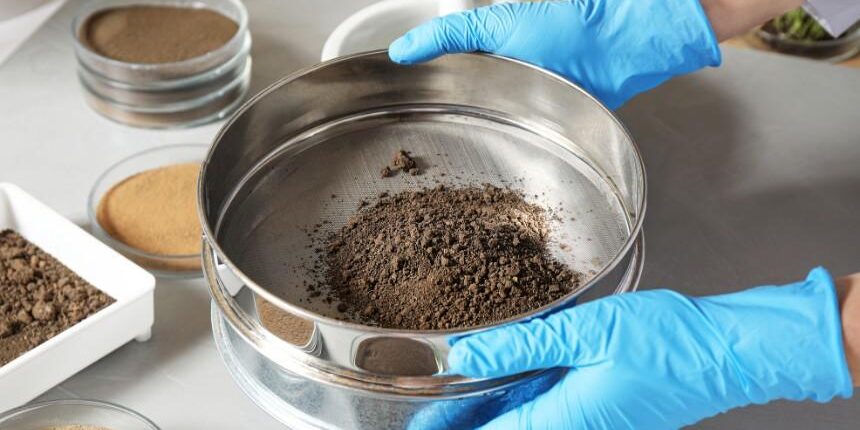
Most people would be surprised to learn that it is unseen background work that often determines the success or failure of a garden.
I have seen too many cases, both as a garden designer and through my general experience in Australia, where people spend hundreds or thousands of dollars on hardscaping and beautiful plants. Yet all fails because they never measured the soil before planting.
The subject of soil testing for landscapes isn’t particularly glamorous. Let’s be honest, it’s not as appealing as designing an outdoor kitchen or selecting water features. But if you want consistent results that meet your expectations, this is the process to start. This procedure should be your first step.
Why Most People Skip This Step (And Regret It Later)
I get it. Your client is excited. They have photos saved on their phone of their dream garden. They want to be off already. The last thing they want to hear, he says, is that you have to grab some dirt samples and wait a week.
However, the important point is that garden soil analysis conducted across Australia is one of the smartest investments a landscaper can recommend. Consider this: you wouldn’t build a house without first determining whether the ground could hold it. Course not. Same principle applies here.
The soil is truly the base that all the rest depends on. Get that part wrong and plants won’t grow, lawns become patchy, and clients ask themselves why they are paying a professional in the first place. But take a look at our archive of garden design courses for professionals right here.
What Soil Testing Actually Tells You
So what information does a proper soil test give you? It provides a wealth of information.
Soil pH levels
This is probably the big one. pH provides you with numbers to represent exactly how acidic or alkaline your soil is, on a scale from 0 through 14. Seven is neutral; below is acid and above is alkaline.
Various plants prefer different pHs. Azaleas and blueberries? They’re eager for acidic soil. If you attempt to grow them in alkaline soils, it shows: They look terrible. This attitude is in contrast to lavender and succulents, which would rather things be a little alkaline.
Australian soils are particularly tricky. Depending on where you’re working, the acidic soils in high rainfall areas or the alkaline soils in drier regions will require different approaches to find long-term stability. Without testing, you’re guessing.
Accurate soil tests make it much easier to pick plants that are well-adapted to your soil, which means you will require fewer chanced soil amendments, a cornerstone of eco-friendly landscaping.
Nutrient levels
Your test shows how much nitrogen, phosphorus, and potassium are available – the big three nutrients plants need. Additionally, it includes calcium, magnesium, sulphur, and trace elements.
Here’s something intriguing: just because nutrients are present doesn’t mean plants can access them. The pH level affects nutrient availability. Even if your soil is loaded with iron, if your pH is too high, plants can’t take it up properly. They’ll show iron deficiency symptoms despite swimming in the stuff. Mad, isn’t it?
Soil texture and structure
Some tests tell you about soil composition. Mostly clay? Sandy? Somewhere in between? This issue affects drainage and watering frequency.
In Sydney, clay soils can pose significant challenges. Clay soils in Sydney are notorious for their ability to retain water, a feature that may seem beneficial initially, but can quickly lead to plant drowning. Sandy soils down in Perth? On the other hand, sandy soils in Perth pose a completely different problem, as water easily penetrates through them and absorbs all the nutrients.
Organic matter content
This tells you how much decomposed plant material is in your soil. More organic matter means better soil structure, better water retention in sandy soils, and better drainage in clay soils. It’s like the universal fix for most soil problems.
The Reality of Landscaping Soil Preparation
Soil prep, I once ignorantly thought, was just digging in some compost when you started. This is more or less what you would expect.
Good landscaping soil preparation involves taking actionable steps based on the results of your soil test:
- Raise pH: If soil is too acidic, add lime
- pH Adjustment: Adding sulphur If soil is too alkaline
- Amending structure: Mix in organic matter to improve drainage and moisture retention
- Blank-slate diplomacy: When the current situation is too problematic, it may be necessary to introduce new soil.
But consider a Melbourne veggie garden I added to. A soil test indicated the pH level was 4.5 – extremely acidic. We took it up to 6.5, where most vegetables do well.” The difference was significant.
Without testing? You’re guessing at lime amounts. A significant amount of money gets wasted. Too much of it swings you in the wrong direction. Testing removes the guesswork.
Soil pH Testing Gardens: Getting It Right
Please explain the correct method for testing garden soil.
You have two main options: DIY kits from the hardware store or professional lab testing.
Home kits are cheap, and they work fine for getting a rough idea. But they’re not hugely accurate. You may see a reading that shows 6.8 when it’s really 7.2.” Sometimes that’s close enough. Sometimes it matters.
Professional lab testing provides you with accurate numbers, comprehensive nutrition analyses, amendment recommendations, and interpretations. While it may be the most expensive and time-consuming, investing in professional lab testing is a wise investment for large landscaping projects.
One common misconception is that you need to collect multiple samples from different locations. Don’t just collect soil from one spot and assume it represents the entire garden. The soil is incredibly variable even over small distances.
Gather samples from several spots, blend them, and get them tested. For lawn areas, go down 10–15 cm deeper in the garden beds. Avoid areas where you’ve recently applied fertiliser—you want to get a sense of the soil as it really is.
Different Soils for Different Folks
One of the most fascinating things I’ve learned over the years is how much soil varies across Australia. What works in Brisbane won’t work in Adelaide. What’s perfect for Hobart might be completely wrong for Darwin.
- Northern tropical areas: Lateritic soils, typically acidic and nutrient-poor because heavy rainfall leaches everything out. Plants struggle despite all that rain and warmth.
- Southern regions (SA and Victoria): Alkaline soils dominate, especially inland. Acid-loving plants won’t survive without proper pH adjustment.
- Coastal areas: Sandy soils drain too fast, salt spray limits plant choices, and salt accumulation often needs addressing before planting.
This is why generic advice from overseas gardening sites may not be very helpful. American gardening blogs might tell you to do X, Y, and Z, but those recommendations are based on entirely different soil conditions.
Australian soils are old and weathered compared to most Northern Hemisphere soils. We’ve got our challenges that need our solutions.
When Clients Push Back on Testing
Here’s the awkward bit. Clients occasionally refuse to pay for soil testing. They reckon it’s unnecessary. They want to get on with the fun stuff.
Here’s where you have to articulate the value. It’s $200 to test your soil. Know what costs way more?
- Dead plants: Replacing everything that died because it’s outside its comfort zone.
- Failed work: Ripping out, reworking the projects with bad drainage
- Persistent problems: Wasting years arguing about things that could have been resolved at the outset
The professionals at Landscapers Network take specific actions to provide you with the right solutions. They understand that correct soil analysis is about getting the job done right on the first visit, not inflating one’s bottom line with superfluous charges.
Share pictures of jobs past with clients where soil prep put you over the top. Most people are bribed once they realise that it’s actually a big deal, not just bureaucracy.
What To Do Once You’ve Got The Results
Getting the test results back is just the start. Now you need to interpret them and work out a plan.
Adjust the acidity first. If the balance is off, the plants will not receive nutrients, even if you apply too much fertiliser. Lime raises it, and sulphur lowers it. How much you need depends on the type of soil you have and the distance you need to shift.
What usually needs to be addressed is as follows:
- Clay soils: Need more amendment than sandy soils to change pH the same amount
- Nutrient deficiencies: Organic amendments add nutrients slowly; chemical fertilisers give a quick hit. Usually a combination works best
- Heavy clay drainage: Add gypsum to break up clay without changing pH, plus organic matter
- Water retention in sandy soil: To help retain water and nutrients, add organic matter. Don’t add clay if you don’t know what you’re doing.
The testing lab will usually give you specific recommendations based on your results. Follow them.
Making It Part of Your Standard Process
If there’s one thing I could say to any landscaper, it is this: Make soil testing a regular part of every job when it makes sense. While soil testing may not be necessary for every small job, it should definitely be included for projects that involve large amounts of planting or laying sod. Absolutely.
Make it a line item in your quotes, not an add-on. Just tell clients from the outset that this is how you work because it produces better results.” Most people appreciate that you are taking the time.
And one more thing: save records. Please maintain the results of tests for each job. Photograph soil before and after amendment. Write about what you did and how plants responded. At some point, you’ll collect a lot of really valuable information about local soil conditions and what grows best.
Having that information enhances your ability to perform your job effectively. That means you can provide better advice to future customers with similar soil. This is the kind of expertise that distinguishes professionals from mere dilettantes.
The Bottom Line
Soil testing isn’t sexy. It’s not going to make your Instagram pop. But it’s what separates landscaping from great landscaping.
If you’re a homeowner planning an extensive project in your garden, track down a landscaper who respects the importance of having soil tested. The experts at Landscapers Network know that long-term success begins with thoughtful preparation, taking a good look before making claims.
For landscapers, making soil analysis just another part of your process is not only beneficial for clients—it protects you. You’re actually dealing with real data, rather than guessing or hoping for the best.
When it comes to Australian garden soil analysis, there are some key things that need to be considered when assessing our soils—our ancient geology, the variety of our climate changes (from tropical monsoons in far north Queensland to year-round precipitation in short Tasmania), and the challenges presented by the natural environment. Generic approaches do not suffice. It is important to understand precisely what you are dealing with in each location.
Ensuring the basics are correct makes everything else easier. Skip it, and you’re just complicating things.
Start with the soil. Everything else follows from there.


